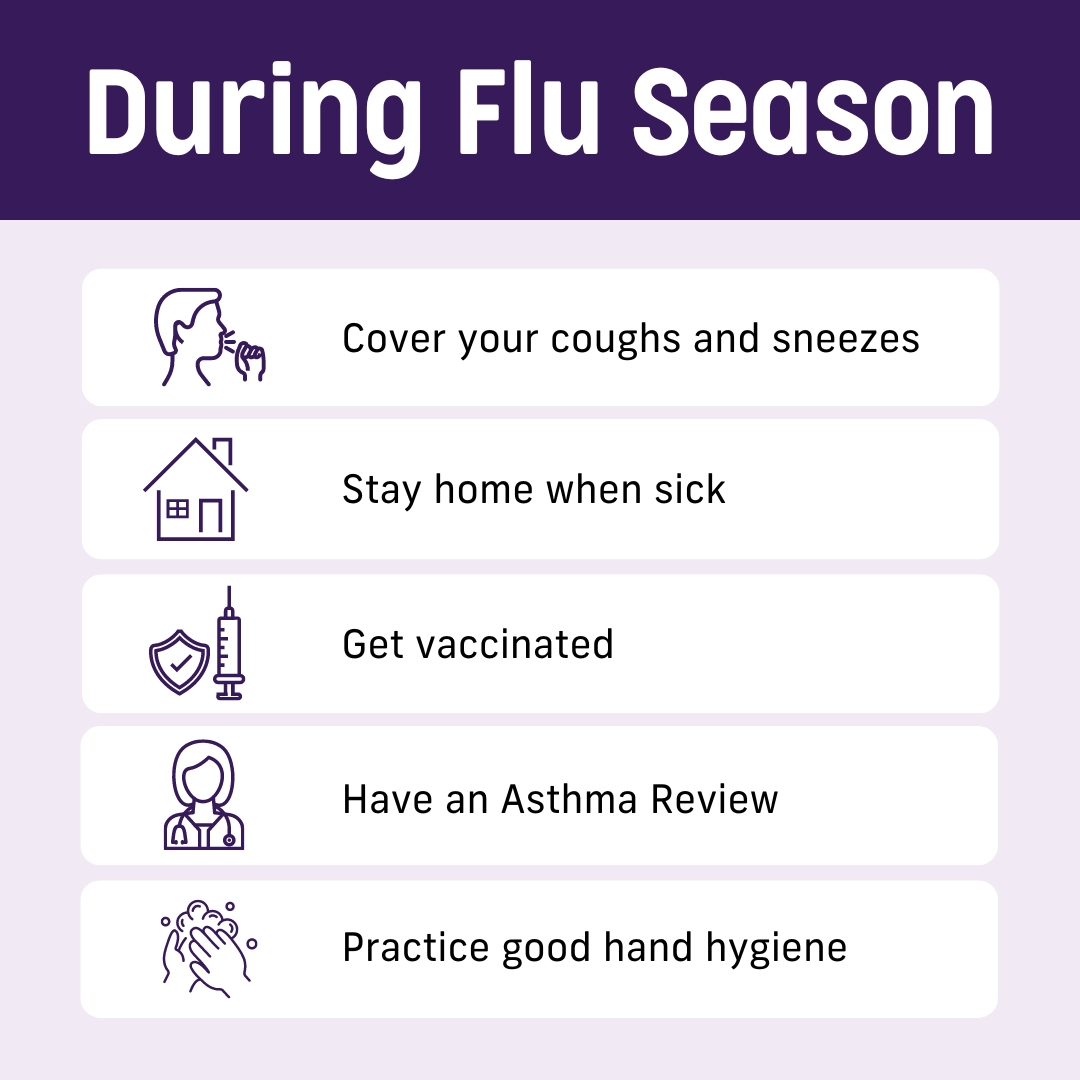
Viral infections, including the flu, are the most common trigger for asthma flare-ups, including asthma attacks demanding a hospital visit.
The number of people with a confirmed flu infection has increased every year since 2022, reaching half a million people in 2025.
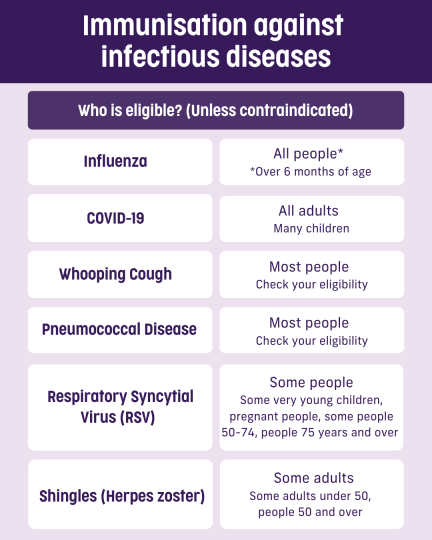
Flu vaccination is recommended every year for all people aged 6 months and over.
Children
In 2025, kids under 10 years were the most likely to get the flu, compared to older children and adults. About half of people hospitalised for the flu that year were kids 16 and under. Although flu vaccination is free for children aged 6 months to 4 years, vaccination has remained low in this age group.
Starting this year, eligible children aged 2 and over can receive either an injectable vaccine (inactivated influenza vaccine) or an intranasal vaccine (live attenuated influenza vaccine given via nasal spray)! The needle-free intranasal flu vaccine has been used in millions of children in the UK, USA and Canada.
Some states and territories offer free flu vaccines, including the needle-free option for kids. The age groups and vaccine types differ by state.
Free flu vaccines (injectable) are available under the National Immunisation Program, including for:
- All kids aged 6 months to4years
- Kids aged 5 and older with certain medical conditions that increase their chance of severe influenza and its complications, includingkids with severe asthma (requiring frequent medical consultations or the use of multiple medications)
- Aboriginal and Torres Strait Islander kids aged 5 and older
To check what your child can get this flu season, visit the Immunisation Foundation of Australia or your State Department of Health website.
If your child is not eligible for a free vaccine, you can still get them vaccinated at a low cost at many pharmacies. Your doctor or pharmacist can help you work out if your child is eligible and which flu vaccine is right for them.
Adults
Many adults are eligible to receive a flu vaccine completely free under the National Immunisation Program, including:
• Pregnant women (at any stage of pregnancy)
• People with certain medical conditions that increase their chance of severe influenza and its complications, including people with severe asthma (requiring frequent medical consultations or the use of multiple medications)
• People aged 65 and older
• Aboriginal and Torres Strait Islander people
If you are not eligible for a free vaccine, you can still get vaccinated at a low cost at many pharmacies.
Some states and territories also offer state-funded flu vaccination for certain people. Visit your State Department of Health website for more information.
Check with your doctor or pharmacist to see if you are eligible and if flu vaccination is suitable for you.
Further information about the flu can be found here:
An initial vaccination against COVID-19, called primary course vaccination, is recommended for:
- kids aged 6 months to 17 years that have a medical condition increasing their risk of severe disease from COVID-19.
The primary course can include several vaccine doses, depending on your health status.
After having received their initial vaccination, most Australians aged 18 and over can consider receiving a booster dose every 12 months, particularly if they have a medical condition that increases their risk of severe COVID-19.
For some groups, it is highly recommended to receive a booster every 6 to 12 months. These include:
- adults with severe immunocompromise
Booster doses are not usually recommended in kids. However, children aged 5 to 17 with severe immunocompromise can consider a booster dose every 12 months.
The conditions that increase the risk of severe COVID-19 include immunocompromising conditions, cardiac disease, respiratory disease including severe asthma (requiring frequent medical consultations or the use of multiple medications), neurological conditions, metabolic conditions, kidney or liver disease, blood or genetic conditions and obesity. If your condition is not listed, your doctor may still advise you to receive a booster.
Check with your doctor or pharmacist if primary or booster COVID-19 vaccination is suitable for you.
Pertussis, also called ‘Whooping cough’ is a respiratory infection caused by a bacteria, Bordetella pertussis, that is very contagious in unvaccinated people. Although whooping cough is often a mild disease in children and adults, the cough can last up to three months. In infants, whooping cough can be very serious and lead to pneumonia, seizures, brain injury and even death.
Even after being infected or receiving a vaccine, protection fades with time and people can get reinfected, so booster doses are recommended to increase protection. In Australia, the whooping cough vaccine is given as a combination vaccine that also immunise against other infections like Tetanus and Diphtheria.
Young Children
Whooping cough can be life-threatening for babies. Free whooping cough vaccination is usually given in childhood with several doses between the ages of 2 months and 13 years of age.
Pregnancy
If you are pregnant, you can receive a free whooping cough booster vaccine for each pregnancy. It is usually recommended (although not free) that other people living with or caring for the baby also receive a booster dose to protect the child.
People working with young children
Healthcare workers and other people working with young children (early childhood educators and carers) are recommended to get a booster dose every 10 years.
Adults with asthma
Although Whooping Cough is generally not severe in adults, it can be associated with worse symptoms and severe disease in people with asthma and can worsen asthma symptoms.
Whooping cough vaccination is available for any adult who wants to reduce their likelihood of becoming ill with whooping cough – however you will need to pay.
Adults 65 years and over
Adults aged 65 years and over are recommended to receive a whooping cough booster vaccine if they have not had one in the past 10 years. This is because whooping cough has greater risks for older people and immunity wanes over time.
Check with your doctor or pharmacist if you are eligible and if whooping cough vaccination is suitable for you.
Pneumococcal disease is caused by a bacteria, Streptococcus pneumoniae, which can lead to an ear infection and severe invasive disease like meningitis, pneumonia and bacteraemia. Pneumococcal infection can also contribute to an asthma flare-up. People with asthma have a higher risk of invasive pneumococcal disease.
Young children
Pneumococcal vaccines are part of the childhood immunisation schedule, with several doses by 12 months of age (free).
Children and adults with asthma
People of all ages over 12 months with a medical risk for pneumococcal disease, including severe asthma (requiring frequent medical consultations or the use of multiple medications), are recommended to receive pneumococcal vaccination. There is an out-of-pocket cost. People with chronic obstructive pulmonary disease (COPD) can access the pneumococcal vaccine for free.
Aboriginal and Torres Strait Islander people
Adults aged 25 and over can receive pneumococcal vaccination (free).
Adults 65 years and over
All adults aged 65 and over are recommended to receive a dose of pneumococcal vaccine (free).
Check with your doctor or pharmacist if you are eligible and if pneumococcal vaccination is suitable for you.
Young Children
RSV is a leading cause of infection of the lungs or lower airways, and a common cause of hospitalisation of young infants in autumn and winter. Most RSV hospitalisations occur in children under 5 years of age that are otherwise healthy. Aboriginal and Torres Strait Islander children are at even greater risk of RSV hospitalisation.
Respiratory viral infections including RSV in the lower airways during infancy are a risk factor linked with childhood asthma.
Several immunisation products are available to help protect young children. This includes antibodies against RSV that can be given to both infants and young children, although current availability depends on the state you live in.
Check with your doctor or pharmacist if your child is eligible and is likely to benefit from RSV antibodies.
Pregnancy
Pregnant persons may receive an RSV vaccine during pregnancy to help protect their infant after they are born. When a pregnant person receives the RSV vaccine, antibodies against the virus are transferred through the placenta to the baby. This helps protect the baby during the first 6 months after birth when they are most likely to be very ill from RSV if they catch the virus.
A maternal RSV vaccine is free under the National Immunisation Program and recommended for people at 28–36 weeks of pregnancy.
Check with your doctor or pharmacist if you are eligible for RSV vaccination during pregnancy and if it is likely to benefit your baby.
Older adults
Although RSV in adults is usually mild, people may develop a lung infection or pneumonia. Older people are particularly at risk, with people aged 50 to 65 years and older having a higher chance of going to hospital due to RSV. Older people with certain medical conditions like a heart condition, a lung condition such as asthma, or a weak immune system, are also more likely to need hospitalisation. The Australian Immunisation Handbook recommends RSV vaccination for:
- all people aged 75 and over
- people aged 60 and over with a medical condition increasing their risk of serious disease, including severe asthma (requiring frequent medical consultations or the use of multiple medications)
- Aboriginal and Torres Strait Islander people aged 60 and over
Anyone aged 60-74 and people aged 50-59 with a medical condition increasing their risk can consider RSV vaccination.
RSV in older people
From 15 May 2026, free RSV vaccination is available under the National Immunisation Program for people aged 75 and over, and Aboriginal and Torres Strait Islander people aged 60 and over. Older people not eligible for free vaccination may get vaccinated via private purchase.
Check with your doctor or pharmacist if you are eligible and if RSV vaccination may be suitable for you.
Herpes zoster, also known as shingles, causes a painful skin rash. It results from the reactivation of the varicella-zoster virus in people who had the respiratory infection varicella (chickenpox) in the past. Although shingles usually heals on its own, it can also cause complications like post-herpetic neuralgia (long-lasting nerve pain), eye problems, neurological problems, scarring and pneumonia.
Shingles and its complications are much more common in people 50 years and older and people with immunocompromise, In fact, half of people who live to 80 years of age will have shingles in their lifetime. People with asthma are particularly at risk: research shows that adults with asthma are nearly 6 times more likely to get shingles than those without asthma. For people aged 60 and over, it is as high as 10 times more likely!
Anyone aged 50 and over, and people aged 18 and over who are immunocompromised, are recommended to get zoster vaccination.
Zoster vaccination is free under the National Immunisation Program for:
- Aboriginal and Torres Strait Islander people aged 50 years and over
- Any adults (18 and over) who are immunocompromised or have a medical condition that increases their risk of shingles. Eligibility varies with individual circumstances and includes adults using some severe asthma therapies (e.g. biologics)
Check with your doctor or pharmacist if you are eligible and if zoster vaccination is suitable for you.







 1800 278 462