






 1800 278 462
This is Part Two of Kathryn’s story. Read Part One here: “I just wanted to know they were OK”: Kathryn’s story of asthma and pregnancy.“
Twenty years after a life-threatening asthma attack during pregnancy, pharmacist Kathryn Williams found herself facing another severe attack during menopause. This time, she began to notice a pattern.
For almost 25 years, Kathryn has lived with asthma. She would occasionally have an asthma attack that left her coughing and struggling to breathe, but never anything like what happened during her pregnancy.
Then, around five years ago, she went through menopause and her asthma became serious again.
“The only other time I’ve been really sick with asthma, interestingly, is when I went through menopause and had a huge asthma attack and ended up having to take off about two months of work,” explains Kathryn.
What started as a bad cold turned into a serious asthma flare-up. Kathryn had to return to hospital and was admitted for several days.
Even after she went home, she couldn’t shake the illness.
“I had about two months off because I just couldn’t shake the cold that kept my asthma going,” said Kathryn.
For Kathryn, the experience was striking because she had lived with asthma for decades, yet these were the only two times it had become so severe.
“The only two attacks I’ve ever had were then.”
Asthma doesn’t always stay the same
Kathryn says that after her diagnosis, she had periods where her asthma was well controlled. She had occasional flare-ups, but nothing like the two severe episodes she experienced around pregnancy and menopause.
“At the time, nobody put two and two together for me. Whereas I think if that happened to somebody now, there would be a way of putting it together,” she said.
Her experience reflects a growing understanding that hormonal changes can influence asthma symptoms and control. During perimenopause and menopause, changes in hormone levels may affect inflammation in the airways and the way the airways respond.
Menopause is one of several stages when hormonal changes may affect asthma, alongside menstruation and pregnancy. But the relationship between hormones and asthma is complex, and researchers are still working to understand why some women experience significant changes while others do not.
For Kathryn, the connection only became clear when she looked back. Her hope is that other women won’t have to wait until then.
Asthma and Women: What You Need To Know
Making space for her own health
Kathryn’s experience has also made her reflect on how easy it can be for women to put their own health last.
“Life got busy with work and because the kids were getting older. I didn’t get to the doctor as much as I should and I probably didn’t look after my asthma,” says Kathryn.
When asked what she would tell her younger self, her answer comes back to the same lesson she learned after her pregnancy.
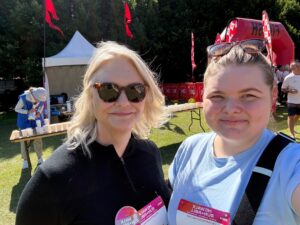
“I think what you said about putting yourself first and listening to your body, because you just keep going and you think it’s okay.”
For Kathryn, that means recognising when something has changed and giving herself permission to stop.
“I do that by stopping and listening to my inner voice, but also when my body says stop.”
She also hopes that sharing her experience will help other women feel like they’re not alone.
“Sometimes you realise it’s actually quite good to talk about it because I don’t talk about it a lot. And then when I do, I realise what a big thing it was and it’s probably good that other people maybe can learn something from it,” she said.
If you notice changes in your asthma around hormone changes, book an appointment with your doctor for an asthma review. You can also speak to an Asthma Educator for free on 1800 ASHMA or book a call for a time that suits you.
Read Part One of Kathryn’s asthma story here: “I just wanted to know they were OK”: Kathryn’s story of asthma and pregnancy.“
Book A Call With An Asthma Educator