






 1800 278 462

Building asthma self-management skills
Asthma doesn’t start and stop with symptoms
You might notice asthma most when you’re coughing, wheezing, short of breath or having an asthma attack. But asthma is a long-term condition. Inflammation can still be present in your airways when you’re feeling well and have no obvious symptoms.
Managing asthma every day, not only when symptoms appear, can help reduce flare-ups and protect your lung health over time.
Learn more about asthma attacks and long-term lung damage
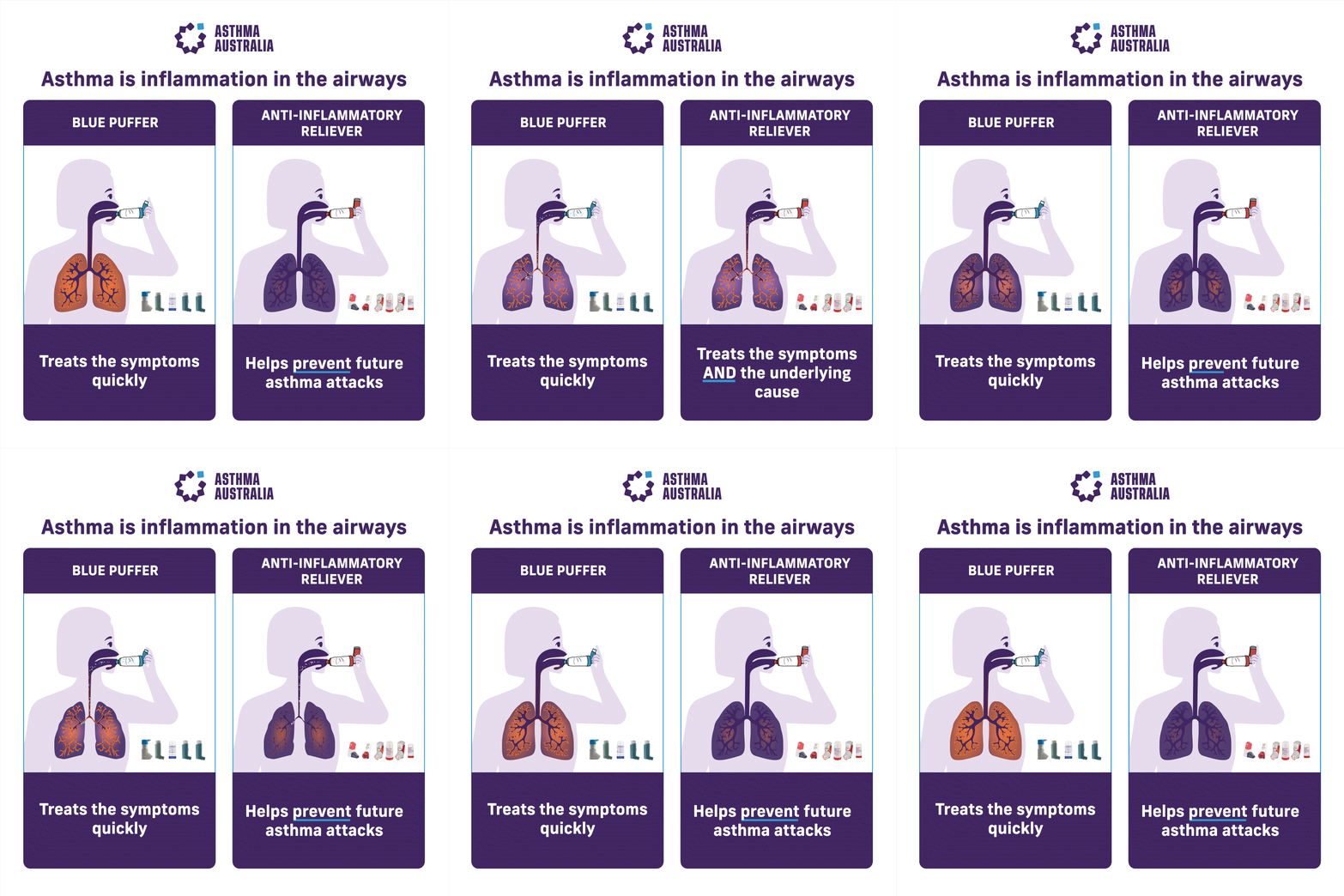
Anti-inflammatory inhalers help treat the inflammation that causes asthma. The medicines that are right for you depend on your asthma and treatment plan. Use your medicines as prescribed and talk with your doctor or pharmacist if you have questions.
Learn more about anti-inflammatory asthma medicines
Self-management
Self-management means learning skills to look after your asthma each day.
Your healthcare team knows about asthma care. You know your symptoms, your body and your everyday life. Working together can help you manage your asthma.
Self-management is the daily choices you make to look after yourself, including managing your asthma.
It helps to:
- learn about asthma and what your medicines do
- know how to use and care for your inhaler
- notice changes in your symptoms
- know your asthma triggers and how to manage them
- follow your written Asthma Action Plan.
Book Asthma Support with 1800 Asthma Calla Service
Know when your asthma is changing
Notice any changes in your asthma symptoms. You can keep track of them in a diary, notes app or another way that works for you.
Your healthcare team may also suggest the asthma control questionnaire or peak flow tracking.
If your asthma gets worse, follow your written Asthma Action Plan. It should tell you what to do and when to get medical help.
Work with your healthcare team
Be involved in decisions about your health and work with your GP, specialist, and other health workers. A regular asthma review can help. Preparing for appointments helps you make the most of them and share the right information. These tools can help you prepare for your review:
Download the My Annual Asthma Review Worksheet (PDF)
Download the Asthma Check-In (PDF)
Look after your overall health
Looking after your overall health can also help you manage asthma.
- Aim for a nutritious diet and regular physical activity.
- Manage other conditions that can affect asthma (e.g., hay fever, reflux, anxiety).
- Look after your mental health and manage stress if it is a trigger for you.
- Avoid smoking and vaping.
- If your weight is affecting your asthma, talk to your healthcare team about support that could help.
- Many people have symptoms during or after sport (exercise-induced asthma). With the right plan, you can exercise safely.
Get Support to manage your asthma
Our Asthma Educators can help you build knowledge and practical skills, prepare for medical appointments, understand the impact of asthma, monitor symptoms, set health goals and feel more confident managing your asthma. The service is FREE!
- Call: 1800 278 462 (Mon–Fri, 9am–5pm AEST) – press 1 to speak with an Asthma Educator.
- Email: [email protected]