





 1800 278 462

Help your community prepare for thunderstorm asthma season.
Our Thunderstorm Asthma Communications Kit contains ready-to-use resources designed to help you raise awareness, share important health messages, and support people at risk. Download social media assets, web content, and communication materials to help spread life-saving information before and during the thunderstorm asthma season.
Download the resources and start sharing today.
-
Newsletter Article and Image
Step 1 – Download your image
Simply click on the image below, right click and save image file
View image link: www.asthma.org.au/wp-content/uploads/2026/09/Thunderstorm-Asthma-Newsletter-Graphic.jpg
Step 2 – Copy the content below to insert within your newsletter
Newsletter copy:
Thunderstorm asthma: know your risk and be prepared
This year marks 10 years since Melbourne experienced the world’s largest epidemic thunderstorm asthma event. On 21 November 2016, thousands of people suddenly developed breathing difficulties over a very short period, and 10 people died.As we remember those who lost their lives and everyone affected by this tragic event, we’re reminded of the importance of being prepared for thunderstorm asthma season.
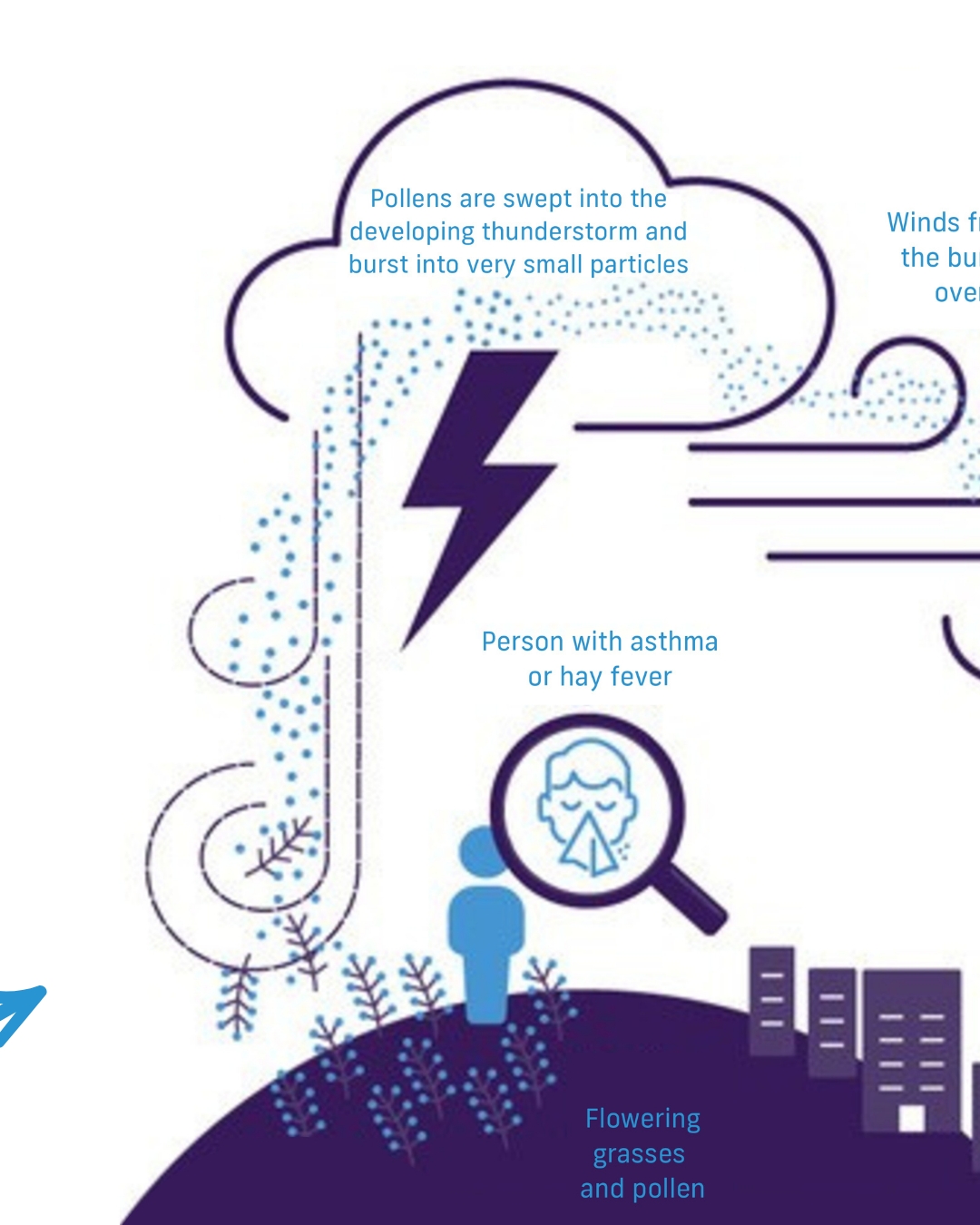
Thunderstorm asthma events are thought to happen when high levels of grass pollen combine with a certain type of thunderstorm.
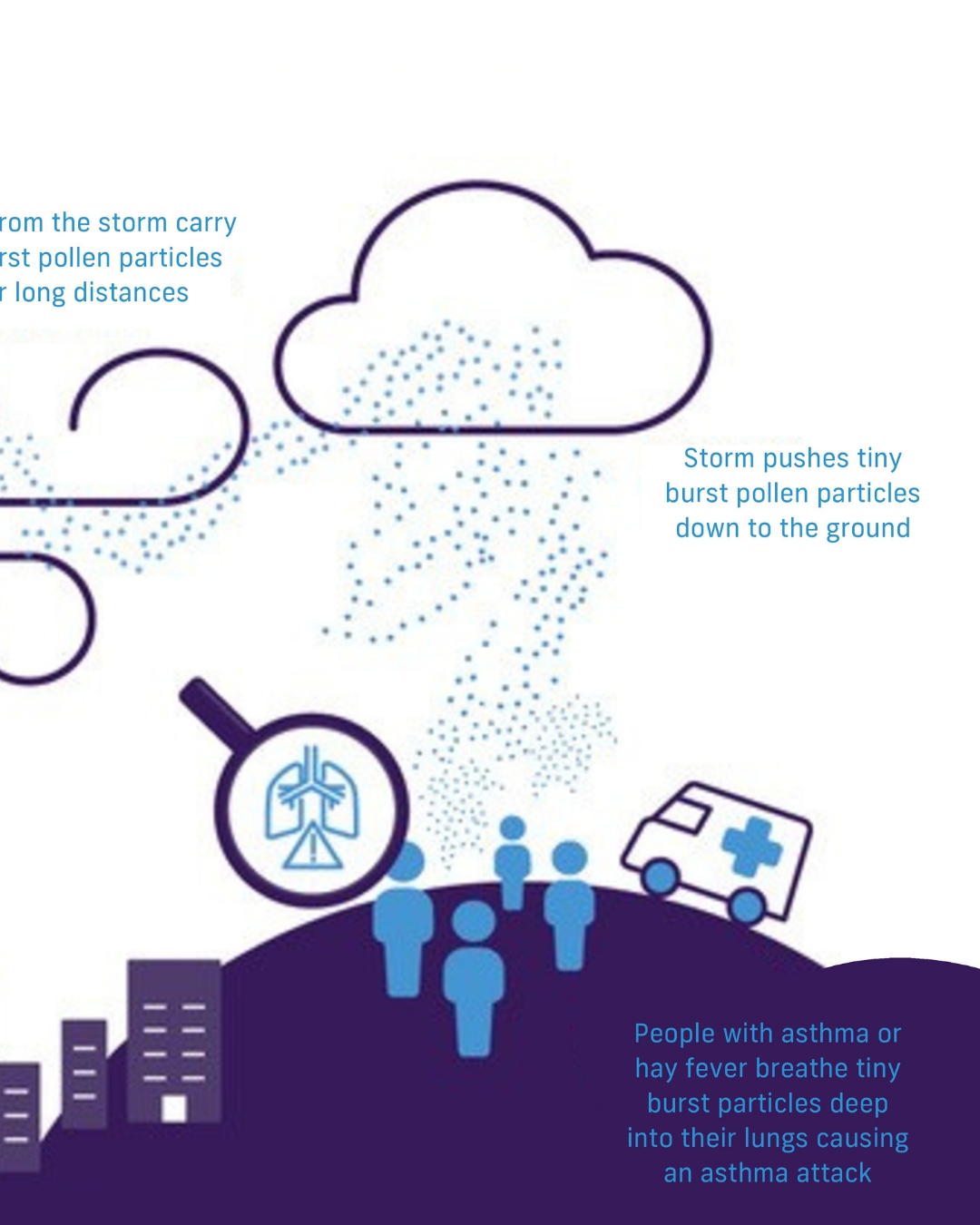
During these storms, tiny pollen particles can be swept into the air and carried long distances. When breathed in, these particles can travel deep into the lungs and trigger an asthma flare-up or attack.
You don’t need to have asthma to be at risk – people with seasonal hay fever, particularly those sensitive to grass pollen, can also be at higher risk.
The best time to prepare is before the storms arrive.
If you have asthma:
✔️Take your preventer inhaler as prescribed
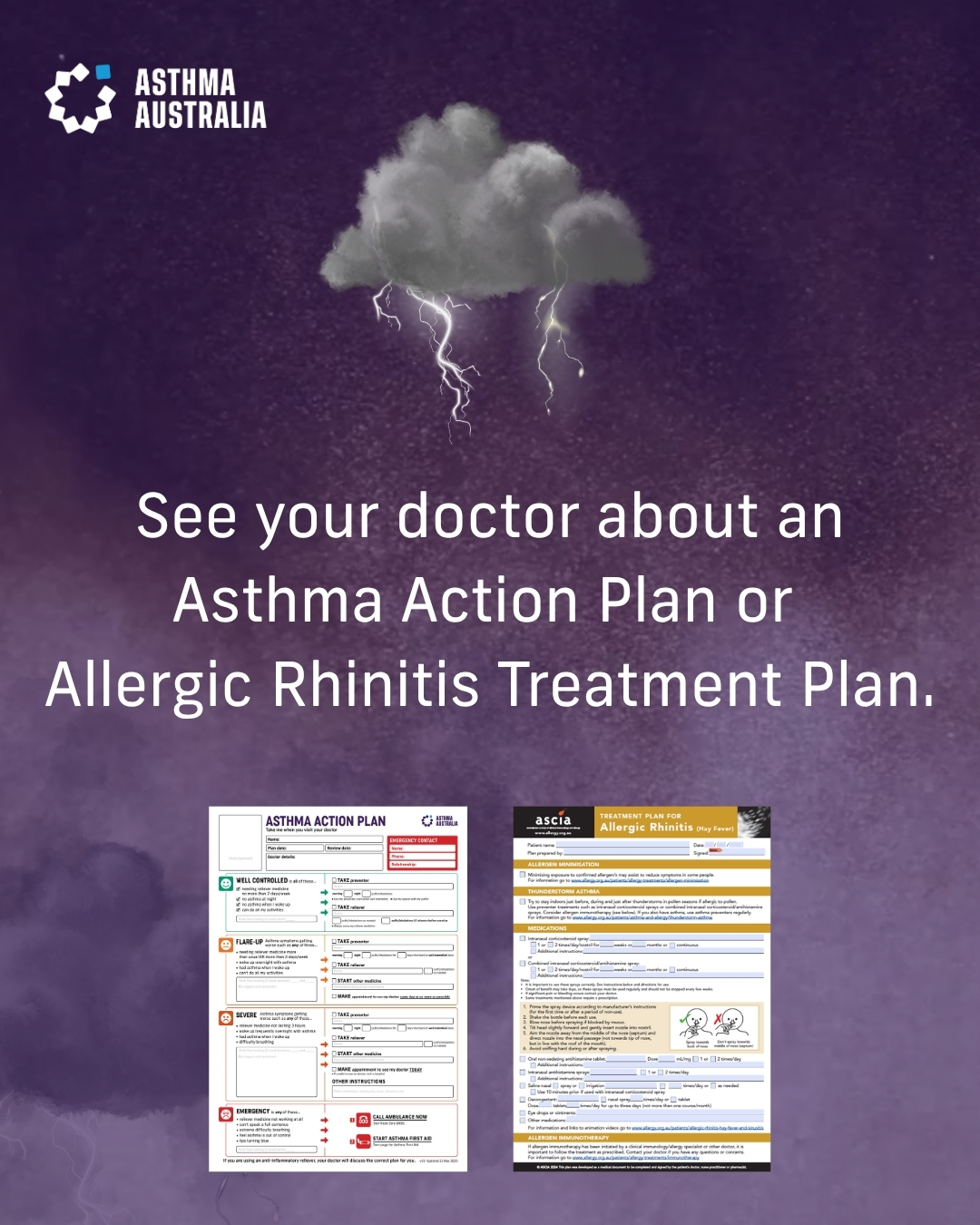
✔️Make sure your Asthma Action Plan is up-to-date
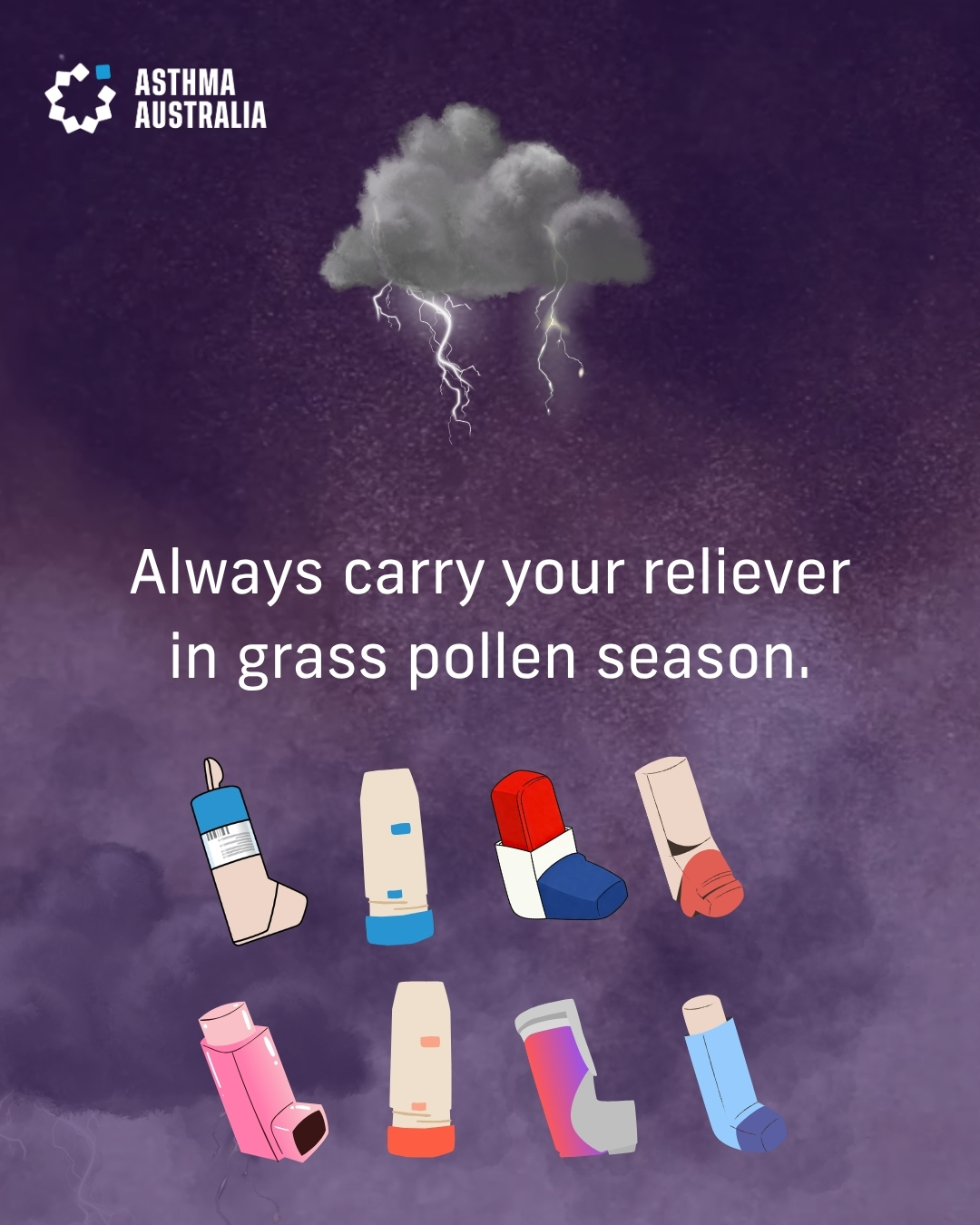
✔️Keep your hay fever under controlIf you’re only using a blue puffer, talk to your doctor or pharmacist about whether a preventer or anti-inflammatory reliever (AIR) is right for you.
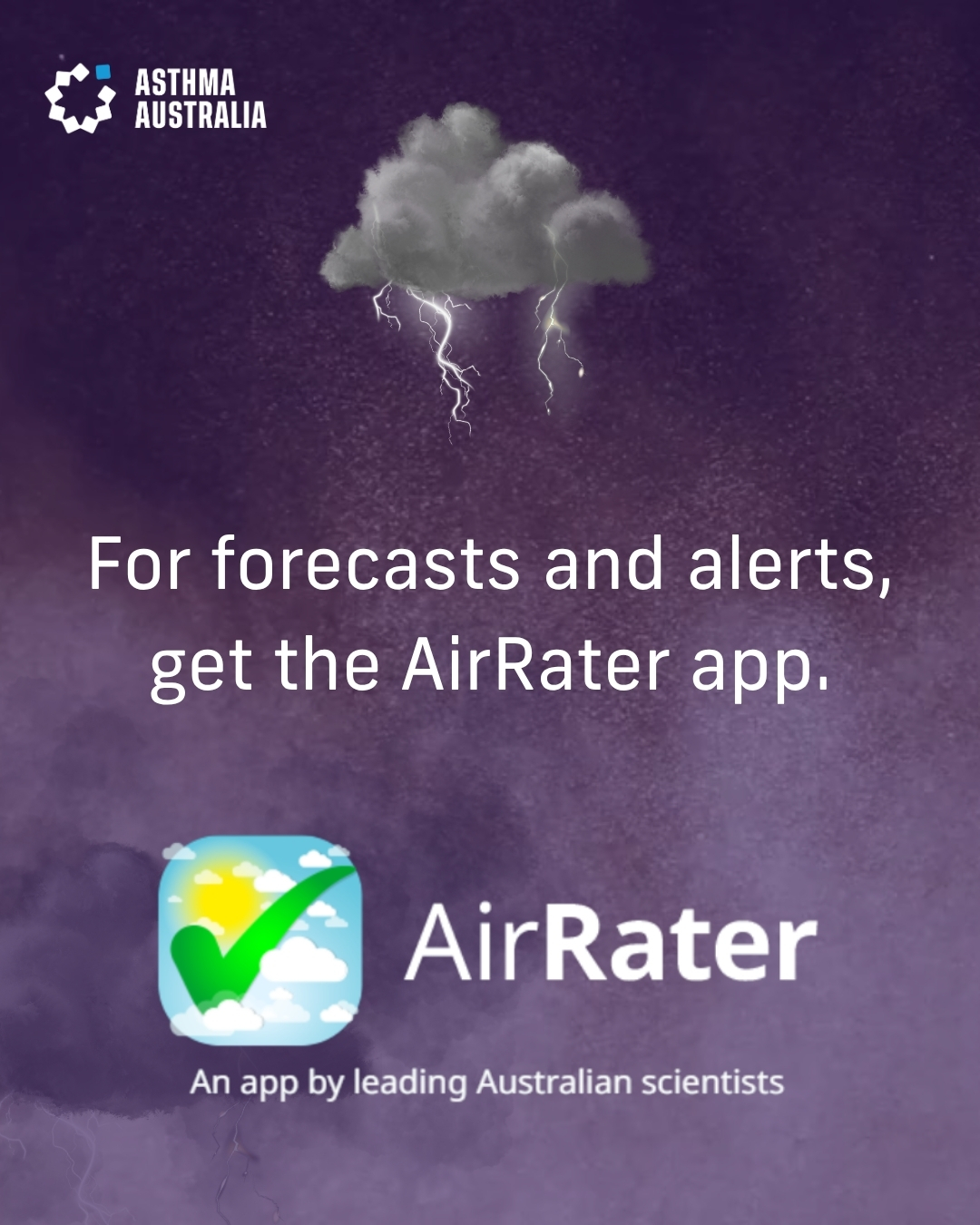
If you’re at risk, keep an eye on pollen levels in your area. You can download the AirRater app to track pollen levels and stay informed.
Find out more about Thunderstorm Asthma and how to prepare here: https://asthma.org.au/triggers/thunderstorm-asthma/
-
Social Media Post (Images and GIFs)
Step 1 – Download the social media tile images
Simply click on each image, right click and save image files.
Please note these are a set of 3 images, so upload them together in the right order.
(Option 1) – Instagram Slide

Image 1: asthma.org.au/wp-content/uploads/2026/09/Thunderstorm-Asthma-Post-1-Slide-1-Instagram.jpg
Image 2: asthma.org.au/wp-content/uploads/2026/09/Thunderstorm-Asthma-Post-1-Slide-2-Instagram.jpg
Image 3: asthma.org.au/wp-content/uploads/2026/09/Thunderstorm-Asthma-Post-1-Slide-3-Instagram.jpg
(Option 2) – Facebook Post GIF
GIF Image: asthma.org.au/wp-content/uploads/2026/09/Thunderstorm-asthma-GIF-with-AA-logo.gif
Step 2 – Copy the content below for your social post
Thunderstorm asthma can happen at any time during the warmer months.
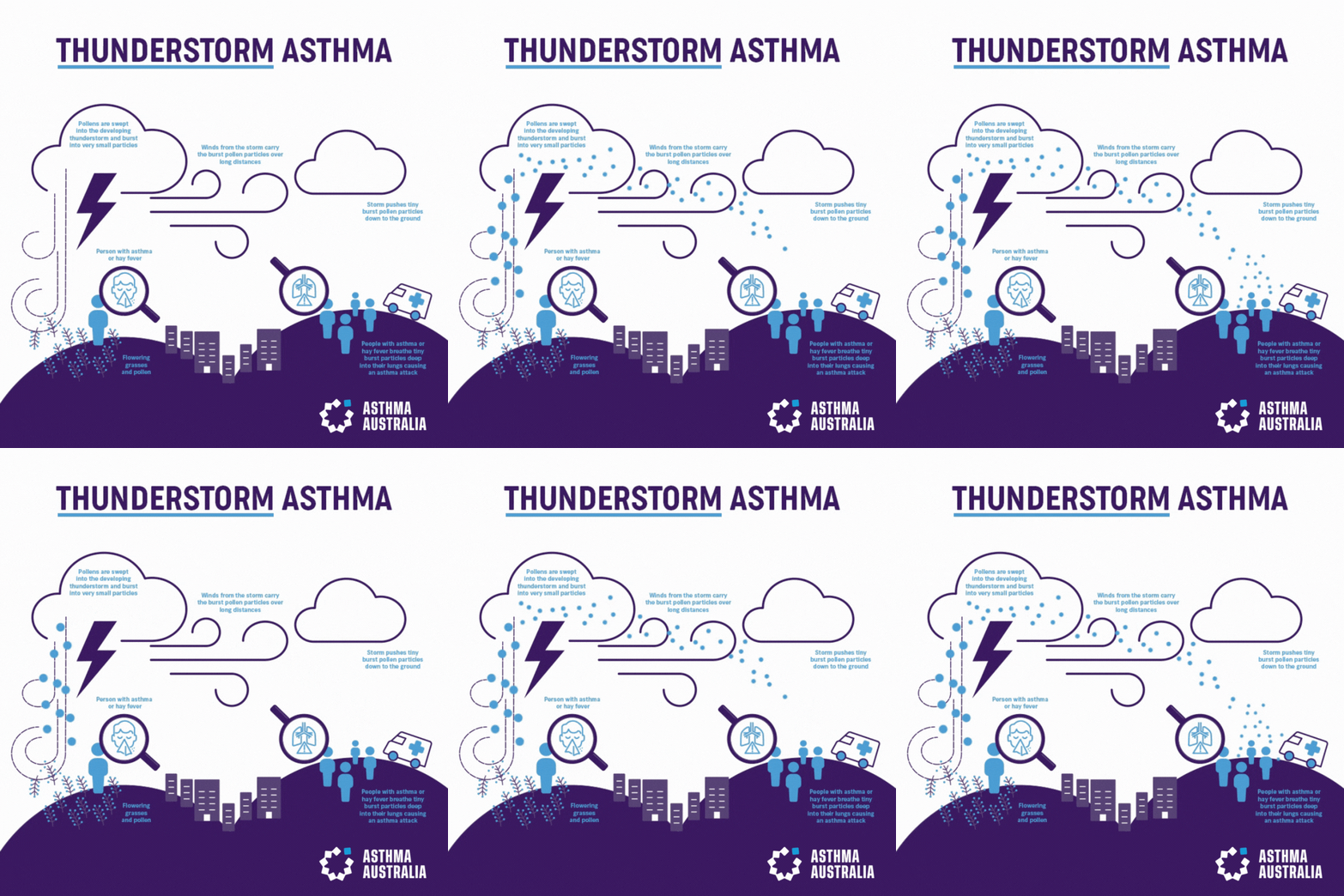
Thunderstorm asthma events are thought to happen when high levels of grass pollen combine with a certain type of thunderstorm.
During these storms, pollen can be swept into the air and burst into tiny pieces. When breathed in, these particles can travel deep into the lungs and trigger an asthma flare-up or attack. You don’t need to have asthma to be at risk. People with seasonal hay fever or a history of asthma can also be at higher risk.
Thunderstorm asthma can happen quickly, so don’t wait for a storm to get prepared.
Find out what you need to know about thunderstorm asthma on Asthma Australia’s website here:
https://asthma.org.au/triggers/thunderstorm-asthma -
Social Media Post (Carousel/Story/Reel)
Step 1 – Download the various carousel images
You can use one of all of the images together as a slideshow or carousel.
Simply click on each image, right click and save image file
Image 1: asthma.org.au/wp-content/uploads/2026/09/TSA-what-to-do.jpg
Image 2: https://asthma.org.au/wp-content/uploads/2026/10/9.jpg
Image 3: asthma.org.au/wp-content/uploads/2026/09/14.jpg
Image 4: asthma.org.au/wp-content/uploads/2026/09/13.jpg
Image 5: asthma.org.au/wp-content/uploads/2026/09/12.jpg
Image 6: asthma.org.au/wp-content/uploads/2026/09/11.jpg
Image 7: asthma.org.au/wp-content/uploads/2026/09/10.jpg
Step 2 – Copy the suggested social media post content below
The best time to prepare for thunderstorm asthma is before the storms arrive.
If you have asthma, there are a few simple things you can do to help reduce your risk:
✔️Use your preventer inhaler as prescribed
✔️Make sure your Asthma Action Plan is up-to-date
✔️Keep your hay fever under controlGood asthma management throughout the year can help reduce your risk of thunderstorm asthma.
Take a few minutes to get prepared now, so you’re ready when the weather changes.
Visit Asthma Australia to find out how to prepare: asthma.org.au/triggers/thunderstorm-asthma
-
Thunderstorm Asthma Factsheet
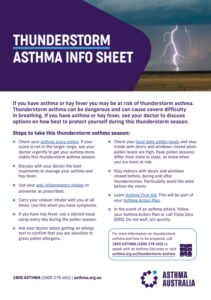
Thunderstorm asthma information
Could you or someone you know be at risk of thunderstorm asthma?
Thunderstorm asthma can occur suddenly and can be life-threatening. Learn what causes it, who is most at risk, and the simple steps you can take to prepare and stay safe during thunderstorm season.
👉 Read our guide: What you need to know about Thunderstorm Asthma